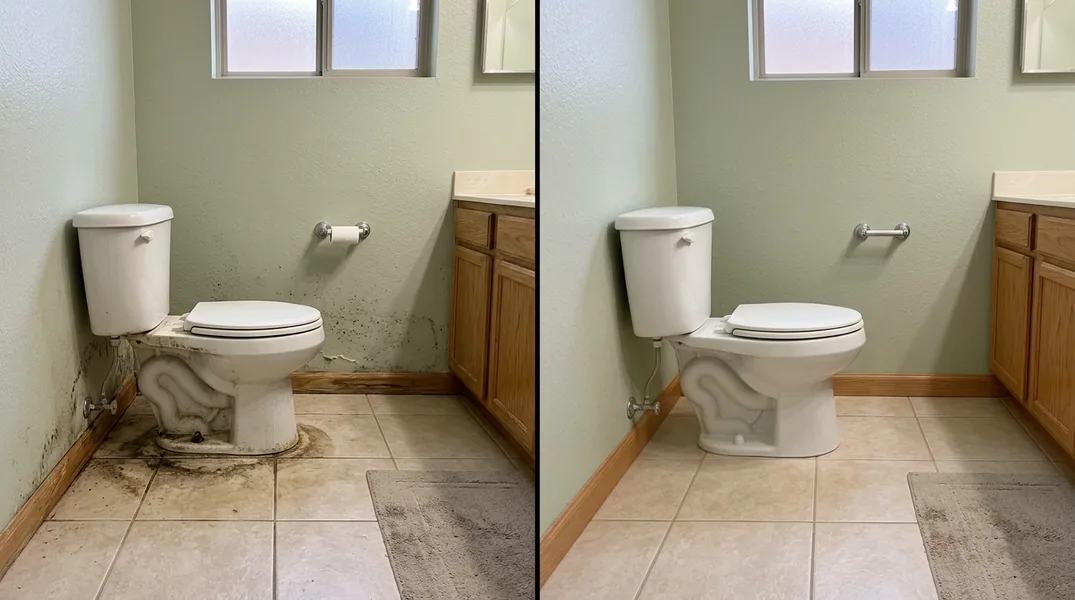
Water Mitigation vs Water Damage Restoration: The Short Answer
If you've had a leak, a burst pipe, or a water heater fail, you've probably heard two terms thrown around: water mitigation and water damage restoration. They sound interchangeable, but they describe two different phases of the same job. Understanding the difference helps you ask better questions, read a scope of work more carefully, and know when a contractor is describing the right next step.
Water mitigation is the emergency phase. It starts with stopping the water source (or coordinating with a plumber who does), then extracting standing water, removing saturated materials that cannot be saved, and drying the structure with air movers and dehumidifiers. The goal is to prevent further damage and get the building dry before mold becomes a building problem. Water damage restoration is what comes after: repairing or rebuilding what the water ruined, from drywall and baseboards to flooring, cabinets, and paint. In practice, mitigation and restoration are two halves of one Water Mitigation & Structural Drying project, and a good contractor will tell you clearly which phase you're in.
What Is Water Remediation, and Where Does It Fit?
You'll also hear the phrase water remediation. In most homeowner conversations, remediation is used loosely to mean the cleanup and drying work, and sometimes it includes mold remediation if moisture has already led to growth. It is not a legally defined term in the way that, say, a building permit is. What matters is what the contractor actually does: does the crew take moisture readings before and after, name the category of water (clean, gray, or black), and log the drying progress in writing? That documentation is what separates a real remediation job from a crew that pulls equipment after two days without numbers to back it up.
At Phoenix Water Damage Restoration, the work is documented to IICRC S500 standards, which is a published standard we follow, not a certification we claim. We are fully insured, and we show our process: readings taken and logged, the category and class of the water named, photos at every step, and a written scope before any rebuild begins. If you're comparing companies, ask any of them to show you the same.
The Water Damage Restoration Process, Step by Step
A typical water damage restoration process in Phoenix runs in roughly five stages. First, the source is stopped. If a supply line is leaking, a plumber fixes the pipe; we coordinate with the plumber rather than doing that repair ourselves. Second comes Emergency Water Removal & Extraction, where standing water is pumped or vacuumed out and saturated carpet, pad, and other unsalvageable materials are removed. Third is drying: air movers and dehumidifiers run until moisture readings in the walls, floors, and framing return to normal dry standards. Fourth is the written scope, which lists what needs repair and gives you a clear picture before reconstruction starts. Fifth is Water Damage Repair & Reconstruction, where drywall, flooring, trim, and paint are restored.
Two details matter more than homeowners expect. First, demolition is never the default. A small clean-water leak caught early may need only extraction and a few days of drying, and an honest contractor will say so rather than cutting out walls. Second, equipment should be removed only when the numbers say the structure is dry, not on a fixed schedule. If a crew pulls dehumidifiers after 48 hours without showing you final readings, that's a behavior worth questioning with any restoration company, including us.
Emergency Water Removal & Extraction Near Me: When to Call a Pro
Some water problems are genuinely DIY-friendly: a small spill, a slow drip under a sink caught within an hour, a toilet supply line that sprayed a limited area. Others are not. Call a professional when water has reached wall cavities, when it's been sitting more than a day, when the water is gray or black (which means contamination), when you smell a musty odor, or when the leak is hidden. Hidden leaks are common in slab-on-grade homes across Mesa and Glendale, and they often show up as a warm spot on the floor, a spike in the water bill, or unexplained moisture near a baseboard. Slab Leak & Hidden Leak Water Damage needs moisture mapping before anyone starts cutting, because the visible wet area is rarely the whole story.
When you call, ask three questions: Will you take and log moisture readings? Will you name the category and class of the water? Will I get a written scope before reconstruction? If the answer to any of those is vague, keep calling. You can reach Phoenix Water Damage Restoration at (623) 255-1819, or request a free estimate to have the situation assessed before you commit to anything.
Water Mitigation vs Restoration Cost: What Phoenix Homeowners Should Budget
Cost is where mitigation and restoration diverge most. Mitigation pricing depends on the category of water, the class of the loss (how much of the structure is wet and how deeply), the materials affected, and the square footage. Extraction and drying for a small clean-water loss typically costs far less than a category 3 sewage cleanup that requires removal of contaminated materials. Restoration pricing depends on what has to be rebuilt: drywall, flooring, cabinets, and paint each carry their own costs. For a realistic range, ask for written pricing based on your specific loss rather than a phone estimate.
Be cautious with any company that quotes a firm price before seeing the moisture readings, or that promises a loss will be covered. Coverage decisions are made by your insurance company, not by the contractor. What a good restoration company can do is document the loss thoroughly (photos, moisture readings, a drying log, and a written scope) so you have a complete record to submit. We help document a loss; we do not handle, file, or negotiate claims, and we never promise that a loss will be covered. That's the honest boundary.
What to Expect From Any Restoration Company, Including Us
Whether you hire a local independent company or a larger outfit, the standards should be the same. Expect moisture readings taken and logged at every visit. Expect the category and class of the water to be named in writing. Expect a drying log you can review, equipment removed only when the readings confirm the structure is dry, and photos at every stage. Expect a written scope before any reconstruction starts, and expect the contractor to tell you plainly when a small job is small. If a company can't produce those documents, that's information you can use before signing anything.
Also expect clear boundaries on scope. Water damage restoration companies handle extraction, drying, repair, and reconstruction. Plumbing repair on the pipe itself is done by a plumber, and roof repair is done by a roofer; we coordinate with both rather than performing that work ourselves. Reconstruction work is carried out by partner crews who hold whatever state or local license the work requires. Mold work is carried out to the rules that apply in the state, and anyone with health concerns about mold should speak with their doctor. If you're in Scottsdale or anywhere across the Valley and want a straight answer about whether you're facing mitigation, restoration, or both, call Phoenix Water Damage Restoration at (623) 255-1819.
Looking for a professional water damage restoration contractor in Phoenix? Phoenix Water Damage Restoration responds fast for all your water damage restoration needs.
Get a Free Quote