



Apartment, Condo & HOA Water Damage in Phoenix: When the Water Comes From Somewhere You Don't Control
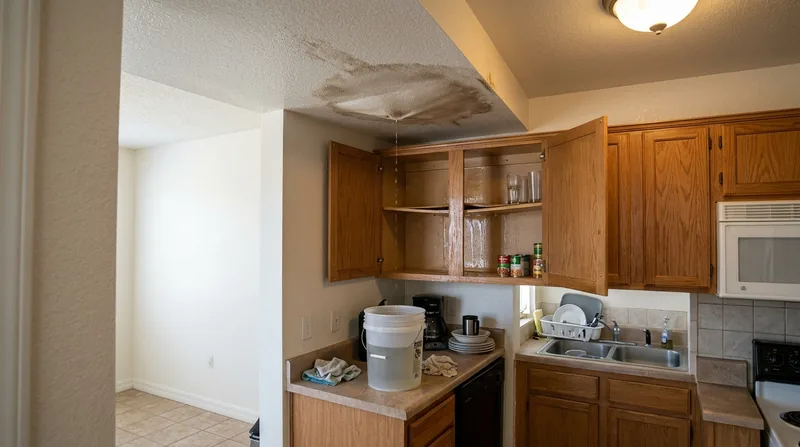
Phoenix spreads across the flat Salt River Valley in stucco-and-tile subdivisions, mid-century brick ranches in Arcadia and Encanto, and condo towers in Midtown and the Biltmore. In every one of those building types, apartment water damage in Phoenix usually starts somewhere the resident cannot see: a supply line in the unit above, a shared riser behind a wall, a condensate line from a rooftop AC unit, or a water heater in a second-floor closet. The water shows up in your ceiling, your baseboards, your floor. The source belongs to someone else.
We dry and repair your unit, document the source and the readings, and give you a written report you can share with your HOA, your landlord, or the neighbor's insurer. We do not decide who pays. We measure, dry, and put the facts on paper. Coverage decisions are made by your insurance company. Call (623) 255-1819 and describe what you see.
If the loss is still active, start with emergency water removal and extraction so the water stops spreading before anything else.
Why Condo and Apartment Water Damage Hits Differently in Phoenix Buildings
Phoenix buildings stack water in ways single-family homes do not. Upstairs laundries in newer two-story stucco subdivisions, shared plumbing walls in Midtown and Biltmore towers, flat and low-slope roofs carrying AC units and condensate lines, and hard-water-crusted water heaters in garages and utility closets all sit above or beside someone else's ceiling. Add monsoon-driven roof intrusion and the failure modes multiply. The water often crosses a unit line before anyone notices.
- Water from the unit above travels down through the slab edge, the drywall ceiling, and into your carpet or laminate before the upstairs neighbor sees a thing.
- A leak in a condo ceiling can come from a supply line, a tub overflow, a shared drain, or a rooftop AC condensate pan, and the source is rarely directly overhead.
- HOA water damage often involves common walls, common pipes, and shared roof assemblies, which means two or three parties are looking at the same wet drywall.
- Category 2 and Category 3 water (grey and black) show up fast in shared drain backups and sewage lines, and they change how we handle materials.
- Wicking pulls moisture up baseboards, toe-kicks, and cabinet sides, so a floor that looks dry can read wet two inches up the wall.
We map the moisture, name the category and class of the water, and log the readings before any material comes out. That record is what makes the rest of the conversation possible.
Key info: A second-floor laundry leak in a Gilbert two-story subdivision sent water down through a light fixture into the first-floor hallway ceiling. The upstairs owner saw a damp patch. The downstairs owner saw a dripping ceiling. We dried both sides of the assembly and documented the shared wall readings so the HOA had one report instead of two arguments.
For the official view on how Arizona handles residential construction and repair work, the Arizona Registrar of Contractors is the state resource homeowners and HOAs use to check contractor standing.
How We Work a Condo or Apartment Loss in Phoenix, Step by Step
Our process is built around the fact that we are working inside a shared building. We do not tear into a common wall without the HOA or the property manager knowing. We take moisture readings and thermal images first, name the Category and Class, set a drying goal, and only then decide what gets removed. Demolition is never the default. A small clean-water leak caught early may need only extraction and a few days of drying.
- We inspect with a moisture meter and a thermal imaging camera to find the wet boundaries, including the ceiling above and the floor below.
- We record psychrometric readings (temperature, relative humidity, grains per pound) and start a written drying log.
- We extract standing water and remove only the materials the readings say are saturated, with a flood cut where the drywall is wet above the baseboard line.
- We set air movers and LGR dehumidifiers, and we run containment and negative air where the water was Category 2 or 3.
- We take readings daily, adjust equipment, and remove it only when the numbers meet the drying goal.
- We write a scope of work with photos at every step before any reconstruction begins.
Drying is documented to IICRC S500 standards, which means the log shows what we measured and when, not just that we showed up.
Key info: In a Midtown Phoenix condo tower, a supply line failure above a ninth-floor unit wet the ceiling and the hallway carpet. We ran a Class 2 drying setup with the HOA's property manager present, logged grains per pound twice a day, and handed over the drying log with the photos. The unit was dry on the numbers, not on a guess.
When the loss crosses into shared building systems, we coordinate with the plumber or roofer who owns the pipe or the roof, and we handle the water side. For moisture that has been sitting in a wall, water mitigation and structural drying is the next step.
Approaches We Use for Shared-Building Water Losses
| Approach | Description | Best for |
|---|---|---|
| Moisture mapping and thermal imaging | We trace wet boundaries through ceilings, walls, and floors before anything is opened up. | Ceiling leaks and hidden moisture from the unit above |
| Extraction and Class 1 to 4 drying | Air movers and LGR or desiccant dehumidifiers sized to the evaporation load of the unit. | Carpet, laminate, and drywall losses in occupied units |
| Containment and negative air | We isolate the work area so dust and moisture do not migrate into neighboring units. | Category 3 sewage backups and shared-wall losses |
| Contents pack-out | We inventory, pack, and move salvageable contents out of the wet zone. | Furnished condos and rental units with tenant belongings |
| Flood cut and selective demolition | We remove only saturated drywall and trim, leaving sound material in place. | Wicking baseboards and wet wall cavities |
Each approach is chosen from the readings, not from a template. The drying log shows why we used it.
Apartment, Condo & HOA Water Damage Cost in Phoenix: What to Expect
Costs start with the category of water and the class of the loss. A clean-water supply line leak in one room is a different job from a Category 3 sewage backup that crossed two units. Square footage, materials (tile, carpet, laminate, wood), and whether the ceiling or floor assembly is involved all move the number. Extraction and drying in a single condo unit typically starts from $350, and the range widens from there.
- Category of water drives handling, containment, and disposal, and Category 3 costs more than Category 1.
- Class of the loss tells us how much water and how much evaporation load we are fighting, which sets equipment count.
- Materials decide what can be dried in place and what has to come out.
- Square footage and access affect labor, especially in towers and gated communities.
- Reconstruction is scoped separately, after the drying is verified.
Getting two or three estimates is smart, and we say that plainly. Ask each company how it will document the readings and what the drying goal is. Our full breakdown lives on the pricing page.
Apartment, Condo & HOA Water Damage Near Me: What to Look For When Hiring in Phoenix
The company you hire should be able to explain what it measured before it explains what it will remove. Ask for a written scope, a drying log format, and proof of insurance. Ask whether the crew will coordinate with your HOA or property manager, because in a shared building that coordination is half the job. Ask who does the reconstruction and who holds the license for that work.
- Confirm the company is fully insured and can produce a certificate on request.
- Get two or three estimates and compare the scope, not just the total.
- Check references from other condo or HOA jobs, not just single-family homes.
- Ask how the company handles permits and HOA approvals before work starts.
- Ask for photos and moisture readings at every step, not only at the end.
If a company cannot show you the readings, keep looking. That applies to any restoration company, including us. Reach out through our contact page to schedule an inspection.
When the water came in through the roof during a monsoon, the next step is roof leak and storm water intrusion documentation alongside the interior drying. In the 85004 ZIP code, our downtown Phoenix apartment and condo water damage page covers the tower and mid-rise building stock in more detail.
Apartment, Condo & HOA Water Damage in Phoenix: Pricing Guide
| Service | Price | Details |
|---|---|---|
| Emergency extraction and drying, single condo unit | Starting at $350 | Includes moisture mapping, extraction, and initial drying setup, with daily readings logged. |
| Ceiling water damage from the unit above | Starting at $650 | Covers ceiling inspection, flood cut if needed, and drying of the assembly below the source. |
| Category 3 sewage backup cleanup | Starting at $1,200 | Includes containment, negative air, antimicrobial application, and removal of contaminated materials. |
| Contents pack-out and storage | Starting at $450 | Includes inventory, packing, transport, and return of salvageable contents after drying. |
| Reconstruction after drying is verified | On estimate | Written scope with photos is prepared before any rebuild, and partner crews hold required licenses. |
| Travel within Phoenix and surrounding areas | Included | No separate call-out or mileage fee inside the Phoenix service area. |
Indicative pricing, the exact cost depends on square footage, finish, and site access. Free personalized estimate within 24h at (623) 255-1819.