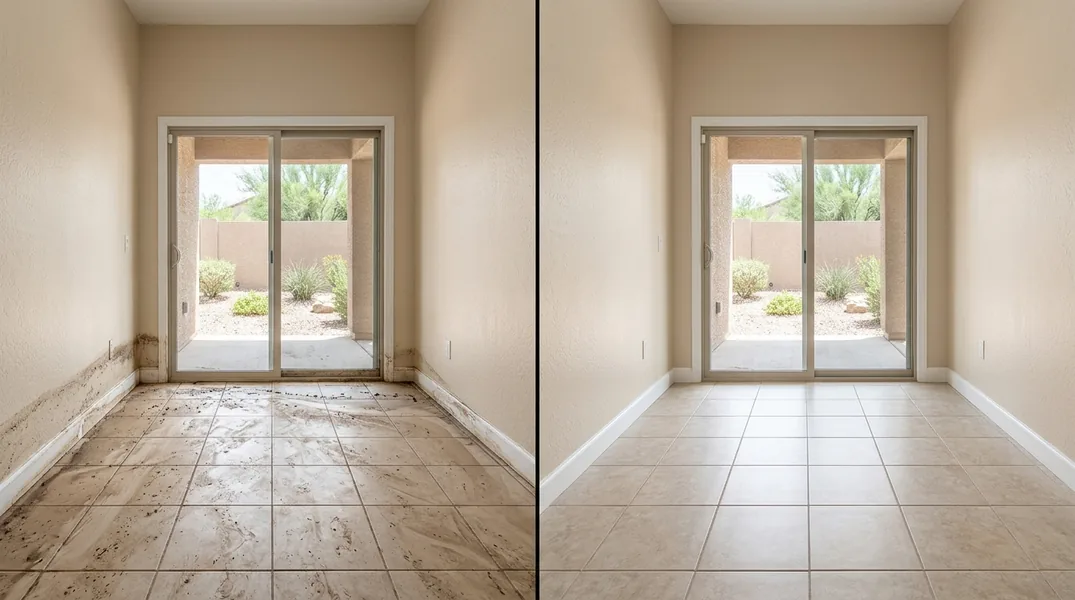
Why Monsoon Flooding Catches Phoenix Homeowners Off Guard
Monsoon season in Phoenix is unlike any weather pattern most homeowners have experienced elsewhere. The storms build quickly on a summer afternoon, dump an inch of rain in less than an hour, and move on. The ground here is sun-baked and calcareous, so it absorbs very little water at once. That water has to go somewhere, and all too often it goes into garages, patios, window wells, and the low spots around your foundation.
The result is storm water damage that can appear in minutes and then sit quietly for days. A little water at the base of a wall can wick up into drywall, soak into baseboards, and create the damp conditions that mold needs to establish itself. The longer that moisture stays, the more of the structure it affects. Understanding the sequence of events is the first step toward protecting your home, both before the clouds gather and after the storm has passed.
Before the Storm: Simple Steps That Reduce Flood Risk
You cannot stop a monsoon, but you can make your home harder to flood. Start outside. Clear debris from your roof gutters and downspouts so water has a clear path away from the house. Check that the ground slopes away from your foundation rather than toward it, and pay attention to any low spots where water tends to pool. If you have a sump pump or a drainage channel, test it before the season starts. Sandbags and temporary barriers can protect doorways and garage entries when a heavy storm is forecast.
Inside, move valuables and electronics off the floor in rooms that have flooded before or that sit below grade. Know where your water shutoff valve is, and make sure everyone in the household knows how to use it. Keep a basic storm kit ready with flashlights, towels, a wet/dry vacuum if you own one, and the phone number of a local restoration company. If your home has a crawl space or basement, check it after heavy rain. Water can collect there without any obvious sign upstairs until the damage is well underway. A few hours of preparation before the season begins can save you a great deal of flood cleanup later.
After the Storm: First Steps When Water Gets In
Once the storm has passed and it is safe to go outside, assess your home carefully. Look for water stains on ceilings and walls, bubbling paint, soft spots in flooring, and that unmistakable damp smell. If water is standing in your home, the priority is to get it out and get the structure drying. Small amounts of clean rainwater that you can safely mop up or vacuum may be manageable on your own, but larger volumes, water that has soaked into carpet and padding, or water that entered through a roof leak usually call for professional help. This is where Emergency Water Removal & Extraction comes in. Extraction removes the standing water, and Water Mitigation & Structural Drying uses air movers and dehumidifiers to pull moisture out of the materials themselves.
What separates a professional job from a guess is documentation. A proper crew takes moisture readings before, during, and after drying, logs those numbers, and does not remove equipment until the readings show the structure is dry. They also identify the category of water (clean rain versus contaminated floodwater) and the class of the loss, because both affect how the job is handled. If your roof leaked or a pipe burst during the storm, the pipe or roof itself is repaired by a plumber or roofer, and the water damage that follows is what a restoration company addresses. If you are unsure whether you need help, call (623) 255-1819 and describe what you are seeing. Honest guidance may be that a small clean-water leak needs only extraction and a few days of drying, and you should hear that plainly.
Emergency Water Removal & Extraction Near Me: When to Call a Pro
Not every puddle requires a crew, but some situations do. Call a professional when water has soaked into carpet, padding, or subfloor; when you see water staining or sagging on a ceiling; when water entered through a roof leak or around windows and doors; or when the water is cloudy or has an odor, which suggests contamination. Sewage backups and floodwater that crossed yards and streets should always be treated as contaminated and handled by trained crews with proper protective equipment. If you are searching for emergency water removal near me in the Mesa or Glendale area, look for a local company that will explain its process before starting.
Ask questions when you call. A good company will tell you what readings they take, how they decide when drying is complete, and what the scope of work includes before any demolition happens. Demolition is never the default. If drywall or flooring can be saved with proper drying, that should be the first option. You should also receive photos at every step and a written scope before any rebuild begins. At Phoenix Water Damage Restoration, drying is documented to IICRC S500 standards, and we are fully insured. We help document a loss with photos, moisture readings, a drying log, and a written scope so you have a clear record. Coverage decisions are made by your insurance company. To schedule an assessment or get a free estimate, call (623) 255-1819.
Flood Damage Restoration Cost in Phoenix: What to Budget
Homeowners understandably want to know what flood damage restoration will cost before they commit. The honest answer is that it depends on several factors: the category of water (clean, gray, or contaminated), the class of the loss (how far the moisture has spread and how deeply it has soaked into materials), the types of materials affected, and the square footage involved. A small area of wet carpet in one room is a very different job from a flooded garage, saturated baseboards throughout a hallway, and a ceiling that needs repair. Because of these variables, reputable companies provide ranges and starting prices rather than a single firm number before inspecting the site.
You can review our pricing page for starting ranges, but treat those as a floor, not a quote. The inspection is what turns a range into a real scope. During that visit, the technician should identify the source, take moisture readings, and explain what drying will involve. If reconstruction is needed afterward, Water Damage Repair & Reconstruction covers the work of putting your home back together, and that work is carried out by partner crews who hold whatever state or local license the work requires. Ask for a written scope before any rebuild starts so you know exactly what is included.
Hidden Leaks and Slab Issues That Monsoon Rain Can Expose
Monsoon storms do not only bring water through doors and windows. The saturated ground and shifting soil can stress plumbing under your slab, and a small leak that was harmless in dry weather can become a real problem when the soil around it moves. Signs include unexplained damp spots on floors, a water bill that jumps without explanation, warm spots on the floor, or the sound of running water when no fixtures are on. Slab Leak & Hidden Leak Water Damage is easy to overlook because the water travels under flooring and inside walls before it shows itself. If you suspect a hidden leak, the pipe itself is repaired by a plumber, and the water damage to flooring, drywall, and cabinets is what a restoration company addresses.
Catching these issues early matters. A slow leak that has been running for weeks can affect far more square footage than a storm that passes through in an hour. Moisture readings taken at the perimeter of the visible damage help map how far the water has traveled, and drying equipment is placed accordingly. If you are in Scottsdale or elsewhere in the Valley and notice any of these signs after a storm, it is worth having the moisture checked before the next rain arrives. Mold is a building problem that follows moisture, and the best defense is to fix the source and verify drying with readings rather than assume the problem has resolved. Anyone with health concerns about mold should speak with their doctor.
Looking for a professional water damage restoration contractor in Phoenix? Phoenix Water Damage Restoration responds fast for all your water damage restoration needs.
Get a Free Quote