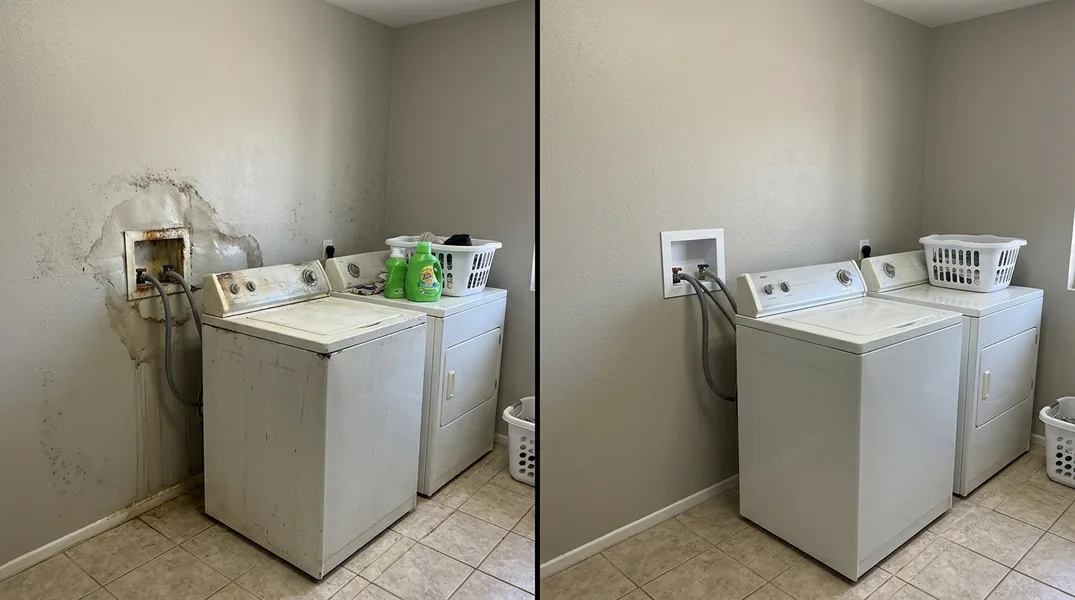
Why the Pipe Material in Your 1970s-1990s Phoenix Home Matters
If your home was built between the 1970s and the 1990s, there is a good chance it still has its original plumbing. In the Phoenix metro, that means you are most likely living with either copper pipes or polybutylene pipes. Both can serve a home for decades, but both have known failure patterns that every homeowner should understand before a small drip turns into a pipe leak water damage emergency.
Copper is durable, but it is not indestructible. Phoenix water tends to be hard and mineral-rich, and decades of flow can wear copper thin from the inside. Pinhole leaks often start behind a wall or under a slab, where you cannot see them until the drywall stains or the floor feels soft. Polybutylene, a gray or blue-gray plastic pipe used heavily in the late 1970s through the mid-1990s, is a different story. It was inexpensive and easy to install, but it becomes brittle over time, especially when exposed to chlorine and hot water. That brittleness is why polybutylene pipes are the material most often associated with sudden, hidden failures in older Valley homes.
Knowing what is behind your walls is the first step. If you are unsure, a plumber can identify the material in an hour or two. That knowledge helps you decide whether to plan for a repipe phoenix project on your timeline or simply keep a closer eye on the plumbing you already have.
Warning Signs of a Failing Copper or Polybutylene Pipe
Most pipe failures do not happen without warning. They give you clues first, and those clues are easy to miss if you are not looking. For copper, watch for green or white crust around fittings, water stains on ceilings or walls that reappear after you paint over them, and a water bill that creeps up without a change in habits. For polybutylene, the signs are often more subtle: a faint chlorine smell near a fixture, small splits at fittings, or a section of pipe that looks chalky or faded.
Pay attention to your floors and foundation as well. A slab leak water damage problem often announces itself with a warm spot on the floor, a sound of running water when nothing is on, or a crack that widens over a few weeks. In homes with a crawl space or basement, look for damp insulation or rusted pipe hangers. If you see any of these, do not wait for the pipe to fail completely. A small leak caught early may only need extraction and a few days of drying, which is far less disruptive than a burst pipe water damage event that floods several rooms at once.
What to Do When a Pipe Leaks or Bursts in Your Home
If water is actively running, shut off the main water valve first. Then turn off the electricity to any room where water is near outlets or fixtures. Move furniture and belongings out of the wet area if you can do so safely, and take photos before anything is moved or cleaned. Those photos matter later, whether you are documenting for your own records or for your insurance company. Coverage decisions are made by your insurance company, but a clear record of what happened helps the process move smoothly.
Once the water is off, call a plumber to repair the pipe itself. That is not work we perform. The pipe is fixed by a plumber we coordinate with, and the water damage that follows is what we handle. For active water in the home, our Emergency Water Removal & Extraction team can remove standing water and start the drying process. If the leak has been slow and hidden for weeks, the damage may be inside a wall or under flooring, which is where Slab Leak & Hidden Leak Water Damage expertise matters. Either way, the goal is the same: stop the source, remove the water, and dry the structure with readings you can see and verify.
Emergency Water Removal & Extraction Near Me: When to Call a Pro
Not every pipe leak requires a professional crew. A small clean-water leak from a supply line, caught within a few hours, may only need towels, a wet vacuum, and a fan. We will tell you that plainly if it is true for your situation. Demolition is never the default, and honest guidance is part of the job. But there are times when calling a pro is the right call: water has reached carpet, drywall, or cabinets; the leak came from a sewage line or involved gray water; the moisture has been present for more than a day or two; or you can smell a musty odor that was not there before.
When you call Phoenix Water Damage Restoration at (623) 255-1819, the conversation starts with questions, not a sales pitch. We ask what happened, when it happened, and what materials are wet. If you decide to schedule, our team takes moisture readings and logs them, names the category and class of the water, and provides a written drying log. Equipment is removed only when the numbers say the structure is dry, and photos are taken at every step. If you want to understand how Water Mitigation & Structural Drying works in your home, we are happy to walk you through it before any work begins. You can also request a free estimate to see what your situation may involve.
Repipe Phoenix: When Replacement Makes More Sense Than Repair
Sometimes the smartest move is not another repair. If you have had three or more pinhole leaks in copper within a few years, or if your home has polybutylene pipes and you have already dealt with one failure, a repipe phoenix project may save you money and stress over the long run. A repipe replaces the failing material with new piping, which reduces the odds of another hidden leak inside a wall or under a slab. It is a planned project with a known scope, not an emergency in the middle of the night.
That said, a repipe is a construction project, and it creates openings in walls and ceilings. Once the plumber finishes, the repair and reconstruction of those openings is the next step. Our Water Damage Repair & Reconstruction work covers drywall, paint, flooring, and trim after water damage or a repipe. Reconstruction work is carried out by partner crews who hold whatever state or local license the work requires. If you are weighing a repair against a repipe, ask your plumber for a written opinion and get a second one if you are unsure. The decision is yours, and it should be based on the condition of your pipes, not on pressure from anyone.
What Water Damage Costs in Phoenix and How to Prepare
Homeowners often ask what water damage work costs before they call. The honest answer is that it depends on the category of water, the class of the loss, the materials involved, and the square footage. A small clean-water leak that soaked a section of carpet may be a modest job. A burst pipe that flooded several rooms, soaked drywall, and reached cabinets is a much larger scope. We publish pricing ranges so you can see the floors before you commit, and we provide a written scope before any rebuild begins. No surprises after the fact.
Preparation matters too. Know where your main water shutoff is and make sure everyone in the household can find it. Keep a folder with photos of your plumbing, your water heater, and any past repairs. If a leak happens, that folder saves time. And if you are in Mesa, Glendale, or Scottsdale, the same advice applies. Older homes across the Valley share these pipe materials, and the sooner you know what you have, the sooner you can plan. If you have questions about your situation, call Phoenix Water Damage Restoration at (623) 255-1819. We will tell you what we see, what we recommend, and what we do not do, so you can make a clear decision for your home.
Looking for a professional water damage restoration contractor in Phoenix? Phoenix Water Damage Restoration responds fast for all your water damage restoration needs.
Get a Free Quote