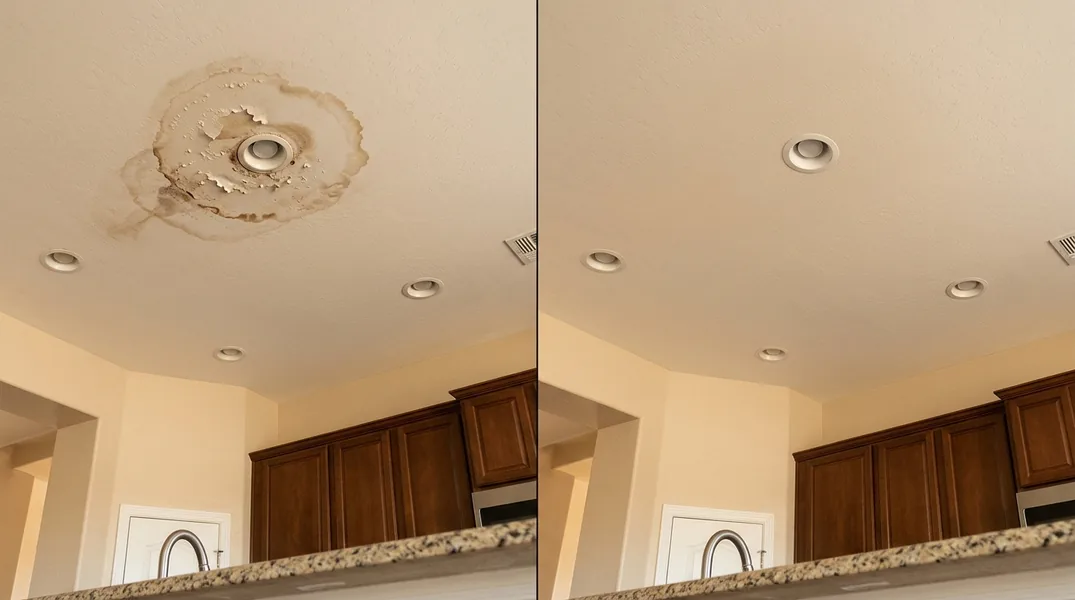
Why AC Condensate Leaks Are a Summer Problem in Phoenix
In Phoenix, the air conditioner runs almost nonstop from May through September. That constant operation produces a steady flow of condensation, and that water has to go somewhere. Normally it drips into a drain pan and exits through a condensate line to the outside or to a drain. When that line clogs with dust, algae, or insect debris, or when the pan rusts through or the line comes loose, the water backs up and finds the path of least resistance. Often that path is straight down into your ceiling.
What makes this so sneaky is the timing. The leak usually starts slowly, and the water travels along framing and drywall before it ever shows up as a stain. By the time you notice a brown ring on the ceiling, moisture has often been sitting in the drywall, insulation, and framing for days or weeks. In Arizona's dry heat, the surface may look dry while the material behind it stays wet. That hidden moisture is exactly what leads to ceiling water damage repair down the road, and it is why a small AC condensate leak deserves attention rather than a shrug.
Warning Signs Your AC Is Leaking Into the Ceiling
The most obvious sign is a water stain on the ceiling, usually a yellowish or brown ring that grows over time. But there are earlier clues. You might hear a faint dripping sound above the ceiling, especially when the AC kicks on. The ceiling may feel soft or spongy to the touch, or the paint might bubble and peel. In some cases, you will see visible sagging or a bulge in the drywall. A musty smell in the hallway or a room below the air handler is another red flag, since it often means moisture is trapped in the ceiling assembly.
If the drain pan overflows, you may also notice water around the indoor air handler or in the attic. In Mesa and across the Valley, many homes have the air handler in the attic or a closet, which means a leak can soak insulation and ceiling joists before it ever reaches the living space. If you see any of these signs, do not wait for the stain to get bigger. Turn off the AC to stop the water source, and call a professional to assess the moisture. You can reach Phoenix Water Damage Restoration at (623) 255-1819 for a free estimate.
What to Do First When You Spot AC Water Damage
The first step is to stop the water. Turn off the air conditioner at the thermostat so the condensate line stops producing water. If you can safely access the drain pan, you may be able to clear a visible clog or empty it, but do not attempt repairs to the line or the unit itself. That is a job for an HVAC technician. Next, protect your belongings. Move furniture, electronics, and rugs away from the area below the stain. Place a bucket or towels under any active drip. If the ceiling is bulging, do not poke it, because that can release a larger volume of water at once and cause more damage.
Then call a water damage professional who can measure moisture rather than guess. At Phoenix Water Damage Restoration, we take moisture readings and log them, name the category and class of the water, and set up Water Mitigation & Structural Drying equipment only where the numbers justify it. A small, clean-water condensate leak caught early may need only extraction and a few days of drying, not demolition. We document the drying with a written log and photos at every step, and we remove equipment only when the readings show the materials are dry. If the drywall or framing is saturated, we explain your options for Water Damage Repair & Reconstruction before any rebuild begins.
Ceiling Water Damage Repair: What the Process Looks Like
Ceiling water damage repair is not just about patching drywall. The first priority is confirming the ceiling cavity is dry. We use moisture meters and thermal imaging to map where the water traveled. If insulation is wet, it usually has to be removed because it loses effectiveness and can hold moisture against the framing. We then set up air movers and dehumidifiers to dry the structure, checking readings daily and logging them. Only after the framing and drywall are verified dry do we move to repair, which may include replacing drywall, re-taping, and repainting. In some cases, the condensate line itself needs a plumber or HVAC technician to fix the source, and we coordinate with them so the repair is not just cosmetic.
One thing to watch for is mold. Mold is a building problem that follows moisture, and ceiling cavities are a common place for it to start after a slow leak. If we see signs of mold growth, we explain that mold work is carried out to the rules that apply in the state, and we do not perform both the assessment and the remediation of the same job. We also help you document the loss with photos, moisture readings, and a written scope. Coverage decisions are made by your insurance company, and our role is to give you the records you need. For a pricing range based on your specific situation, call (623) 255-1819.
Emergency Water Removal & Extraction Near Me: When to Call a Pro
Not every AC condensate leak is an emergency. A small stain with no active drip and no sagging may allow time for a scheduled assessment. But some situations need prompt attention. If water is actively dripping, if the ceiling is bulging or sagging, if you see water pooling on the floor, or if the leak has been going on for more than a day or two, call a professional. The longer water sits, the more likely it is to spread into insulation, framing, and adjacent rooms. In Scottsdale and Glendale, we see plenty of attic air handlers where a slow leak soaks insulation for weeks before the homeowner notices.
When you call Phoenix Water Damage Restoration, we ask questions about what you are seeing and hearing, then schedule a visit during our opening hours. We do not promise a response time or arrival window, but we do promise a process: moisture readings taken and logged, the category and class of the water named, a written drying log, photos at every step, and a written scope before any rebuild. If the source is a hidden leak behind a wall or under a slab, we also handle Slab Leak & Hidden Leak Water Damage. The phone is answered during our opening hours at (623) 255-1819, and you can request a free estimate online.
Preventing Future AC Condensate Leaks
Prevention is mostly about maintenance. Have your HVAC system serviced before summer, and ask the technician to check the condensate drain pan, the line, and the float switch. A float switch shuts off the unit if the pan fills, which can prevent an overflow. Keep the drain line clear by flushing it periodically with water or a recommended cleaner. If your air handler is in the attic, check the pan and surrounding area a few times during the cooling season. In Phoenix's dust-heavy environment, condensate lines clog more often than homeowners expect.
If you have had a leak before, consider having the ceiling cavity inspected after any repair to confirm it is dry. A moisture meter is a small investment compared to the cost of replacing saturated drywall and insulation. And if you are ever unsure, call a professional who will measure rather than guess. Phoenix Water Damage Restoration is a local, independent company serving Phoenix, and we are fully insured. We document the loss, explain your options, and coordinate with the plumber or roofer when the source repair is outside our scope. Call (623) 255-1819 to discuss your situation.
Looking for a professional water damage restoration contractor in Phoenix? Phoenix Water Damage Restoration responds fast for all your water damage restoration needs.
Get a Free Quote